Callouts
Arriving On Scene
Locate the call, work with other units, engage safely, and request backup.
Arriving at a call is where the real work begins. The route only gets you close — from there it's up to you and the other responding units to find the scene, figure out what's going on, and handle it safely.
Locating the Call
A call won't always be exactly where the marker is. For most callouts, the minimap route only navigates you to the general area, and it's up to you to locate the precise scene once you arrive.
Other times it's far more obvious — the callout might give a house address or a store name in its description. Pay close attention to any additional information in the callout panel, including descriptions of possible suspects or vehicles, as it often points you straight to where you need to be.
Working With Other Units
Coordinate with the other officers responding to the call. Spread out to search the area, share what you find, and approach the scene together. A handful of officers working as a team will resolve a call far more safely and effectively than everyone acting alone.
Engaging Safely
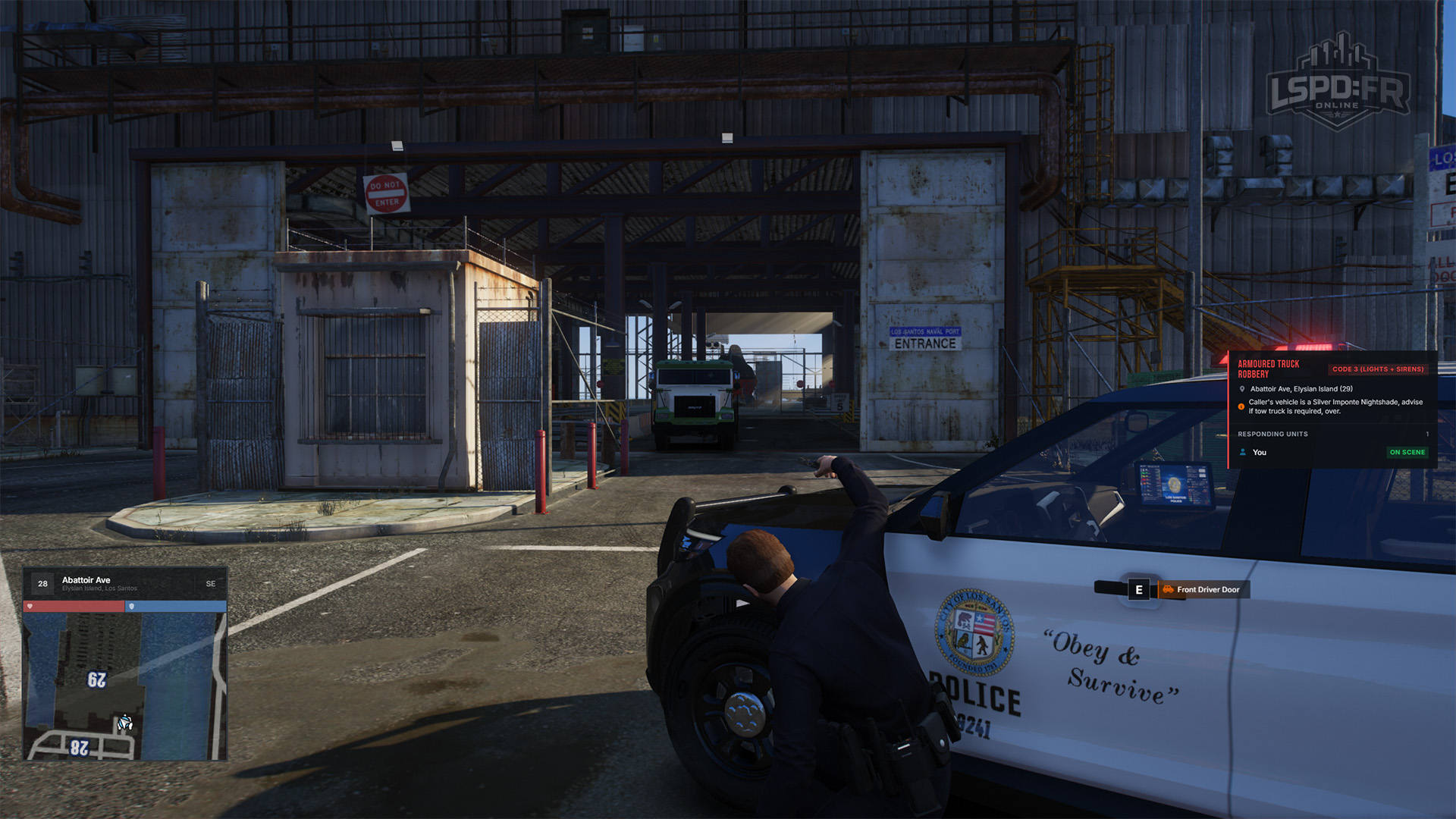
If you arrive and immediately hear gunshots, get to cover and only engage from where it's safe to do so. Priority of life matters here — protect yourself and the public first. A few rules to keep in mind:
- Watch your fire and avoid crossfire with other officers.
- Only shoot to kill once you have a confirmed line of sight on a suspect.
- Never spray blindly into an area where civilians or other units could be.
Requesting Backup
If you're outnumbered, outgunned, or simply need more hands, don't push in alone. Wait at a safe location or take cover, then request backup from the Up Arrow Action Menu and hold until additional units arrive.